
1. Vitamin E for Hardening of the Arteries: Why One Million Americans Die Needlessly Every Year

This is the First Article in the Heart Health series.
“And the LORD God formed man of the dust of the ground, and breathed into his nostrils the breath of life; and man became a living being”
(Gen 2:7, NKJV).
We did not evolve from monkeys. We were created by a wonderful God. He wants us to take care of our bodies while we live. Yes, we will all die sometime, but we don’t need to die as young and helpless as we currently do here in the US.
Introduction
Imagine the following very short fictional story:

A younger man beside her leaned in. “The defense contractors write the checks, and Congress cashes them. They are feeding the monster. Every vote for another weapons package is another shovelful.”
Sarah scribbled some notes. “And the administration’s position is that this is a defensive alliance.”
“Defensive?” A third protester, tall and bearded, let out a short laugh. “They are in league with the giant. Have been for decades. You follow the money, and you’ll see whose interests are actually being served. It isn’t the people dying over there.”
Sarah lowered her mic for a moment. “What do you want people watching at home to take away from today?”
The grandmother looked at her steadily. “That ordinary people showed up. That not everyone agreed, and that somebody said no, not anymore.”



I’m not stating anything about the military here. I’m just making a point for comparison. Now, ask yourself: where are all the protestors outside the cardiologists’ offices?
Around 116,000 Americans died in World War I. Around 405,000 Americans died in World War II. Around 37,000 Americans died in the Korean War. Around 58,000 Americans died in the Vietnam War (2). If you total these numbers, you find that around 616,000 Americans died in the 20th century from four different wars.
Cardiovascular Disease Deaths in the United States: The Real Numbers
Consider that the number of people who died in 2022 from cardiovascular disease (CVD) was 941,652 (3). This includes 854,652 deaths in the United States, where the leading condition was directly attributable to atherosclerosis, and about 87,000 deaths from heart failure, where atherosclerosis was an indirect contributing factor.
That translates roughly to:
| Coronary heart disease (heart attacks, CAD) | ~372,000 | Direct — plaque blocks coronary arteries |
| Ischemic stroke | ~115,000–140,000 (est.) | Direct — plaque in carotid/cerebral arteries |
| Peripheral artery disease (PAD) | ~11,596 (as underlying cause) | Direct — plaque in limb arteries |
| Heart failure (atherosclerotic origin) | subset of ~87,000 | Indirect — damaged heart muscle |
| Total CVD | ~941,652 | Atherosclerosis is the dominant mechanism (1) |
This doesn’t include the number of people who died of kidney failure due to hardening of the arteries. Those deaths could be counted separately — “Number of deaths from nephritis, nephrotic syndrome and nephrosis: 55,081” (4). And these total numbers repeat nearly every year — roughly one million (1,000,000) deaths this year, one million next year, and so on.
The number of deaths from atherosclerosis doesn’t need to be this high. “Nobody has to die,” as a friend of mine used to say. If everyone suffering from atherosclerosis-related illnesses were to take vitamin E every day, the number of deaths would likely be significantly reduced. How far, you ask? Let’s explore this and see. Over the next nine chapters, you’ll hear more information on this topic, and you can decide for yourself.
As a side note — pretty please don’t chain yourselves together outside your cardiologist’s office either. Just read on, and start taking your vitamins correctly.
Dr. Wilfrid Shute’s Vitamin E Approach to Hardening of the Arteries
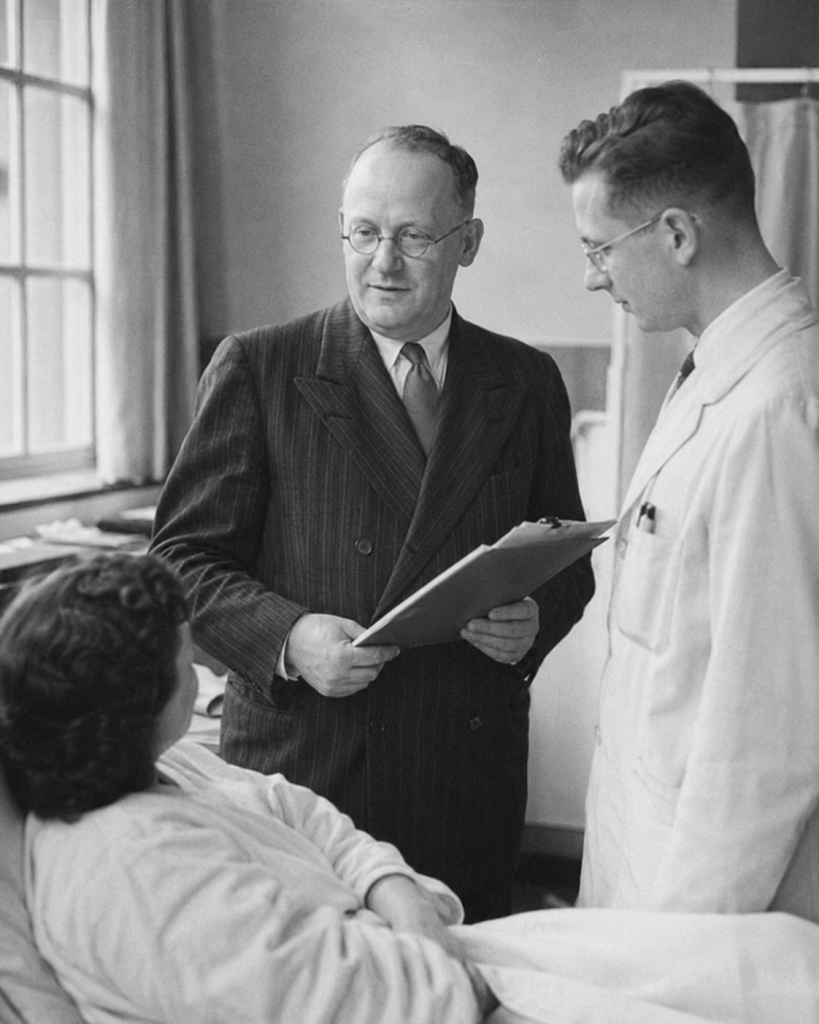
Canadian cardiologist Dr. Wilfrid E. Shute spent decades arguing that mainstream medicine was overlooking one of the most powerful tools against cardiovascular disease: vitamin E. Working alongside his brother, Dr. Evan Shute, at their clinic in London, Ontario, the two physicians successfully treated over 35,000 patients with high doses of vitamin E from the 1940s to the late 1970s.
For hardening of the arteries — arteriosclerosis and atherosclerosis — Shute believed vitamin E worked on multiple fronts. He described it as a dilator of blood vessels that opens up new pathways in damaged circulation, bypassing blockages produced by clots and hardened arteries. As early as 1945, the Shute brothers discovered that vitamin E was beneficial in reversing heart disease and treating angina pectoris. Additionally, Shute believed — and had evidence to support it — that vitamin E would remove plaque from arterial walls. He also found that adding vitamin C would greatly increase the effectiveness of vitamin E (5).
Dr. Shute’s Vitamin E Dosage Recommendations
Regarding dosing, Shute basically prescribed up to 1,600 IU of vitamin E daily (sometimes 800 IU, and sometimes slightly more than 1,600 IU), unless the patient had a recent strep infection that resulted in chronic rheumatic heart disease (5). If a patient had recently had a strep infection in the knee or another joint, and they suffered from chronic rheumatic heart disease, he would give a different dose.
This is where Shute’s approach became notably careful. For chronic rheumatic heart disease, he recommended:
- Month 1: 90 IU daily
- Month 2: 120 IU daily
- Month 3: 150 IU daily (may be the ideal dose, though occasionally more was necessary)
He cautioned that the response would necessarily be slow (6). The reason is that if too much is given at the beginning, the increased strength of the heartbeat may create difficulty. If done gradually, the final dose could safely reach 800 to 1,600 IU eventually (5).
Note: if a patient had just had the strep infection — which is virtually synonymous with acute rheumatic fever — he would give a dose of 800 IU to 1,600 IU right away (5).
Hypertension
For hypertension, Dr. Shute noticed that approximately one-third of his hypertensive patients tended to have an increase in blood pressure on high doses of vitamin E. For some time, historically, his patients did not have blood pressure medicine to turn to, so he would start his patients with high blood pressure off slowly at around 90 IU or 150 IU per day.
After more of them began to take blood pressure medications, he tended to leave his patients on their high blood pressure medications while starting vitamin E. As he monitored their progress over time, he would see how they did with increased doses.
He would basically follow the same pattern he followed with chronic rheumatic heart disease, of starting on lower levels and raising them over time. If the blood pressure meds were doing their job well, he would increase levels at a faster pace.
Some suggestions for helping with blood pressure may be to use beet root concentrated juice, beet powder, hawthorn berry, hibiscus, artichoke, and others. Sometimes combinations work better. In Shute’s day, a personal blood pressure cuff was rare. Today, blood pressure cuffs are not that expensive. Buy one, and as you introduce vitamin E, monitor your blood pressure levels. Increase the vitamin E slowly if your blood pressure tends to rise when you take vitamin E. See a nutrition specialist to help.
Vitamin C Dosing for Heart and Artery Health
As stated above, vitamin C tends to help vitamin E work better. Additionally, vitamin C begins to heal the fissures in the artery walls so that plaque has less room to attach itself to and grow.
To dose vitamin C, many nutritionists recommend the following approach. To find your correct, safe dose, start by purchasing a small, simple bottle of basic ascorbic acid vitamin C. On a day when you are not ill or feeling sick, take 1,000 mg per hour, every hour, until you start to have cramps and perhaps develop loose bowels. This is a sign you’ve reached saturation — also known as bowel tolerance. Some people reach saturation at 6,000 mg or 7,000 mg; others have gone as high as 18,000 mg. Everyone is different. If you’re ill, your need for vitamin C increases — so again, choose a day when you feel good and aren’t going anywhere, in case of loose bowels.
As a side benefit, all that vitamin C will help your body detox, along with other benefits of increased vitamin C intake.
After finding your saturation point, you may safely take 1,000 mg less than that every day, if you choose. We’ll discuss why this is a good idea in a later chapter on antioxidants. You may also benefit from switching to the liposomal form of vitamin C, since people generally don’t experience loose stools from it as easily, and it’s far more absorbable by the body.
Best Forms of Vitamin C

Other recommended forms include vitamin C buffered with rose hips or buffered with magnesium. If you take a buffered vitamin C, you may also tolerate more of it than regular ascorbic acid. You may take more at once, but not all of your daily bowel-tolerance dose at one time — you still need to spread dosing throughout the day.
When choosing a magnesium-buffered vitamin C, pick a good form of magnesium. A simple rule: if it ends in “-ate,” it’s okay to eat. Magnesium malate, magnesium taurate, and magnesium glycinate are all good forms. Other forms of magnesium tend to cause loose bowels.
Thee same spacing principle applies to liposomal vitamin C — you can take more than 1,000 mg at once, but it’s still best to spread out your full daily dose, though this matters somewhat less than with other forms.
If you’re using regular ascorbic acid, it leaves your body fairly quickly — with a half-life of around 30 minutes, meaning roughly half of it clears within that time (depending on how much vitamin C is already in your system and other factors). Not all of it leaves, though. Liposomal or buffered vitamin C stays in the body longer.
If you’re ill, your need for vitamin C increases again, so you can take more. The need varies by illness and severity.
Vitamin E Myths vs. Facts
There’s a lot of misinformation about vitamin E circulating today, in both print and audio form:
- Many say it’s a blood thinner. It is not.
- Many say you need to take “natural” vitamin E. You do not.
- Many say the mixed tocopherol form is the only kind you should take. This is not true.
- Others claim mixed tocotrienols are best. It likely isn’t.
- Others don’t believe vitamin E will remove plaque from artery walls. It will.
- Others don’t realize it’s the master controller of blood clotting in the body. It is.
And that’s not even counting vitamin E’s other benefits. Let me explain a little further.
Vitamin E comes in eight different forms: alpha, beta, delta, and gamma tocopherol, plus alpha, beta, delta, and gamma tocotrienol. The most common form is regular alpha tocopherol, and this is the one Shute used. Today, many argue that vitamin E needs to be “natural” or “mixed” in form, or it will somehow be less effective. That’s incorrect.
Here’s the problem: there is no single “natural” vitamin E in nature. Every food containing vitamin E has a different mixture of tocopherols and/or tocotrienols. For example, rice has a different mixture than wheat, and these differ from nuts and seeds, etc. There are even a couple of fruits in South America that contain only two tocotrienols. So, what counts as “natural”? Every food is different. You may benefit slightly more from mixed tocopherols, but the actual advantage is greatly exaggerated. Regular alpha tocopherol is very safe and effective.
Vitamin E is one of the few natural substances capable of removing plaque buildup in the arteries. No manmade substance can do this. A few other natural substances can remove plaque as well, but none are as likely to be as effective as vitamin E.
Shute treated his patients with simple alpha tocopherol, and he said, “Over the years we have achieved substantial relief in 80 to 85 percent of our more than thirty-five thousand cardiovascular patients!” (5). His results would have likely been even better had he known everything I’ll be covering in this book on heart health.
I’ll talk more about the benefits of vitamin E and share more heart health information in the following chapters.
Key Takeaways
- Cardiovascular disease is the real “war” — it kills more Americans every single year than died across WWI, WWII, Korea, and Vietnam combined, yet draws no protests, no outrage, and little public urgency.
- Atherosclerosis is the hidden driver behind most of these deaths — hardening and plaque buildup in the arteries are the underlying mechanisms behind heart attacks, stroke, and a large share of heart failure cases. It also contributes to many deaths from kidney disease and aneurysms.
- Vitamin E was Dr. Shute’s primary tool, used in doses up to 1,600 IU daily for most cardiovascular patients — but he treated rheumatic heart disease very differently, starting as low as 90 IU and increasing gradually over months to avoid overtaxing a weakened heart.
- Hypertension required its own careful titration — roughly a third of Shute’s hypertensive patients saw blood pressure rise on high-dose vitamin E, so he started them slowly (around 90–150 IU) and, once blood pressure medications became available, kept patients on those meds while introducing vitamin E and adjusting the pace based on how well the medication was controlling their pressure.
- Acute strep infections and rheumatic fever required a different approach — patients with acute rheumatic fever were started on a higher dose of 800 to 1,600 IU.
- Vitamin C and vitamin E work as a team, in Shute’s view — vitamin C was believed to enhance vitamin E’s effectiveness, while also helping heal the arterial wall fissures where plaque tends to attach.
- Not all vitamin E is the same — Shute used plain alpha tocopherol. Claims about “natural,” “mixed tocopherol,” and “tocotrienol” forms being superior are largely overstated, since no food source produces one uniform, universally “natural” blend anyway.
- Dosing vitamin C requires finding your personal bowel tolerance — a self-titration method where you increase intake by 1,000 mg per hour until mild GI symptoms appear, then back off slightly to find your daily ceiling.
- Liposomal vitamin C is generally the best-absorbed and longest-lasting form, offering real practical benefits over plain ascorbic acid.
- Monitoring matters — a home blood pressure cuff is inexpensive today, and Shute’s cautious, watch-and-adjust approach to hypertension is far easier to follow now than it was in his own time.
Conclusion
For nearly four decades, Dr. Wilfrid Shute and his brother Evan quietly treated tens of thousands of patients with something most of mainstream cardiology still dismisses as irrelevant: a vitamin. Why does a disease that kills nearly a million Americans a year get treated as background noise, while far smaller death tolls from war or disaster dominate headlines and provoke public outcry? And why has a simple, low-cost nutrient that Shute believed could meaningfully reduce that death toll never been seriously tested at scale by modern medicine?
This article is an invitation to look at the history, weigh the evidence, and ask better questions about an approach that has been largely set aside rather than disproven.
Summary
The scale of cardiovascular death in America dwarfs the combined toll of the 20th century’s major wars — yet receives a fraction of the public attention. Roughly one million people die per year from cardiovascular disease, compared with about six hundred thousand per century from the major 20th-century wars.
Shute’s approach was never one-size-fits-all — the same nutrient that helped most cardiovascular patients at high doses had to be introduced cautiously and slowly in patients with rheumatic heart disease or hypertension, where Shute watched closely and adjusted as he went. Shute believed that consistent, correctly dosed vitamin E and vitamin C supplementation — and the synergistic benefits the two offer together — could meaningfully reduce the death toll by as much as 80 to 85 percent.
In the articles ahead, you’ll see how these percentages may be achievable and even improved. The conversation about atherosclerosis prevention and reversal is far from settled — and the next several articles in this series will dig deeper into related topics, the controversy, and what it might mean for your own heart health.
References
1. A private Claude.ai chat link.
2. American War and Military Operations Casualties: Lists and Statistics [legislation] [Internet]. [cited 2026 Jun 20]. Available from: https://www.congress.gov/crs-product/RL32492
3. Iapoce C. AHA Report Reaffirms Cardiovascular Disease as Leading Cause of US Deaths | HCPLive [Internet]. 2026 [cited 2026 Jun 20]. Available from: https://www.hcplive.com/view/aha-report-reaffirms-cardiovascular-disease-as-leading-cause-of-us-deaths
4. FastStats [Internet]. 2026 [cited 2026 Jun 20]. Available from: https://www.cdc.gov/nchs/fastats/kidney-disease.htm
5. Shute W E. Dr. Wilfrid E Shute Complete Updated Vitamin E Book. New Canaan, Connecticut: Keats Publishing; 1975.
6. DoctorYourself.com – Vitamin E Treatment Protocol [Internet]. [cited 2026 Jun 20]. Available from: http://www.doctoryourself.com/shute_protocol.html