4. Why the Low-Fat Diet Myth Is Hurting Your Heart Health (and What to Eat Instead)

This is the Fourth Article in the Heart Health series.
“You shall not circulate a false report. Do not put your hand with the wicked to be an unrighteous witness”
(Exo 23:1, NKJV).
My goal with this chapter is to persuade you of this: a low-fat diet will not help your heart. In all likelihood, it will hurt it. If you have been spreading the myth that a low-fat diet is heart healthy, please stop. You are in danger of being among those who spread a “false report.”
Introduction
We’ve all heard the warnings: cut the fat, watch your cholesterol, count your calories. It’s the advice doctors have handed out for decades, and most of us have followed it without question. But what if some of that advice is exactly backward? What if the very foods we’ve been told to avoid are the ones our bodies actually need—and the “safe” substitutes are quietly making us sicker, heavier, and more nutrient-deficient than ever?
That’s the question I want to dig into here by drawing on my own family’s experience, looking at how traditional cultures ate for generations without our modern diseases, and taking a closer look at how cholesterol, fat, and carbohydrates actually behave in the body. I want to challenge some of the most common—and most costly—dietary advice out there. Along the way, we’ll also look at a quieter problem: how the modern food supply has slowly drained vitamin E from our diets and what that’s doing to us (1).
How a Low-Fat Diet Led to Weight Gain in My Own Home
There is a lot of truth to the saying, “You are what you eat.” While not true in every sense, it can often help you see accurately into your health. What you put on the end of your fork has a great impact on your health. It is likely the most important factor.
My wife, Mary, had some heart problems several years ago. The doctors did what doctors typically do. They put her on a low-fat diet. And what mama eats, most of the house eats. So, as an added benefit, I got to eat a low-fat diet as well.
And then, we gained weight, and gained, and gained. We still haven’t completely overcome this worst of advice. We have somewhat reversed this situation and are improving, but not fully. It is bad advice for several reasons.


First off, fatty foods actually contribute to more large-particle cholesterol in the body, but not the small-particle kind. If you have a fissure in your artery, only small-particle cholesterol can get stuck in it. The large-particle cholesterol floats right on through. Since fatty foods only contribute to the large-particle cholesterol, they are irrelevant with respect to plaque buildup.
Simple sugars like table sugar, bread, pasta, white potatoes, white rice, and more produce small-particle cholesterol. This type of cholesterol gets stuck in your artery wall fissures. It builds up and causes hardening of the arteries and all of its associated diseases.
So, here we are eating a low-fat diet, and what do we consume? We eat sugar, bread, pasta, white potatoes, white rice, etc. These are all low-fat foods. And guess what? This causes weight gain as well.
Not only does small-particle cholesterol hurt your arteries, but gaining weight also affects your heart health. Excess weight helps bring on high blood pressure, increased risk of diabetes, and other factors that can indirectly contribute to heart disease, but excess weight is also a direct causal factor. The more weight you carry around, the more likely you are to have a heart attack.
Additionally, when you eat a low-fat diet, you have trouble holding onto your fat-soluble vitamins like vitamin E, K2, D3, and others. Yes, you should eat good fats, but eating good fats isn’t as important as eating fat in general.
Food, What It Is Made Of
Food is made of three parts, or five, depending on how you are counting. When you eat, you consume fats, proteins, and carbohydrates. And you could count toxins and water as well. Alcohol is either a toxin or another category. Alcohol is not a carbohydrate, but it usually comes along with a great deal of them. We won’t debate this for now.
When doctors put you on a low-fat diet, you consume more carbohydrates and less protein and fats. You watch your fat intake only.
News flash, we don’t need carbohydrates to survive. We need fats and proteins. The American Eskimos used to live on a diet of fat and protein for 9 to 10 months of the year. I don’t necessarily recommend never eating carbohydrates. But the fact of the matter is, if you go without them for a period of time, you won’t die. If you go without protein or fat for an extended period of time, you will likely die.
What a Carnivorous Diet Looked Like for Traditional Cultures
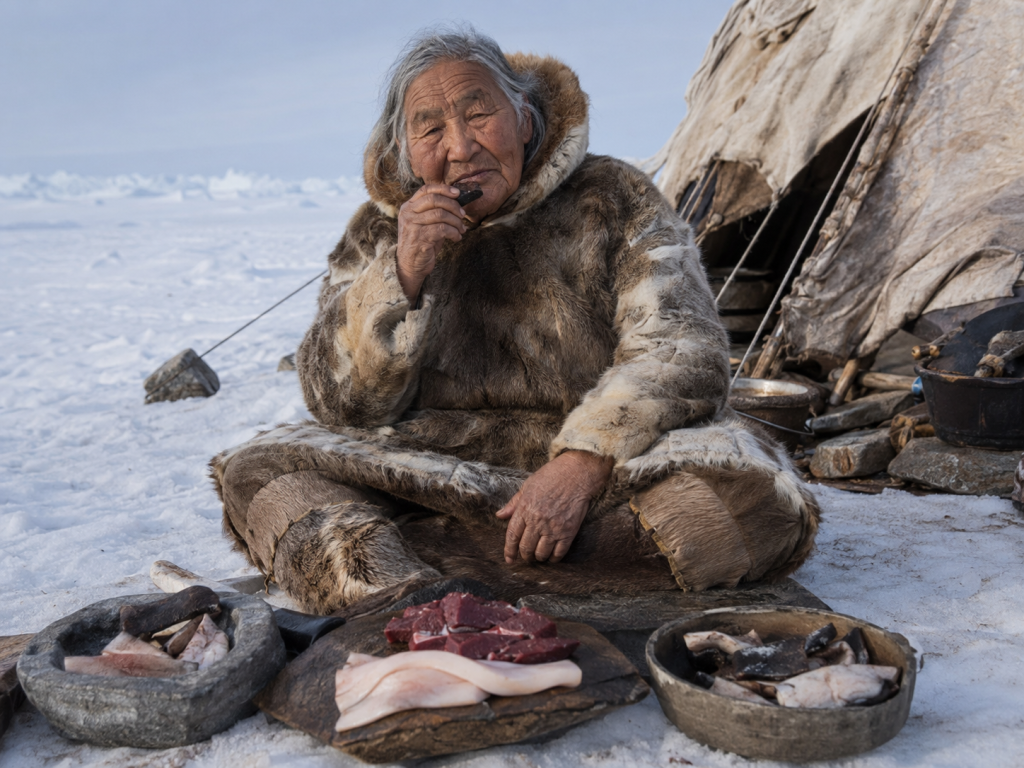
The American Eskimos (specifically the Inuit tribes) used to live on a carnivorous diet. For around 9 to 10 months out of the year, all they ate was whale, seal meat, walrus, caribou, and polar bears. They would mix in some wild berries, wild tubers, and roots for a couple of months, and they lived long and healthy lives.
The people in a California town did not believe anthropologist Vilhjalmur Stefansson when he reported how the Eskimos lived and the benefits they received from eating in this manner. So, he paid a person to watch him and ensure that he followed the same diet. To everyone’s amazement, when the doctor ate the diet, he developed zero deficiencies and seemed very healthy after one year (2).
It should be noted that the Eskimos had very low atherosclerosis despite their high-fat diet, or I should state more accurately, because of their high-fat diet. This is what we should actually expect (3). We have been sold a bill of goods and untruths about fat vs. sugar.
Dr. Weston A. Price followed the Masai people of Eastern Africa and observed that they ate a meat-only diet and that they ate raw meat, mixed with blood and raw milk. The Masai people were strong and doing well (2).
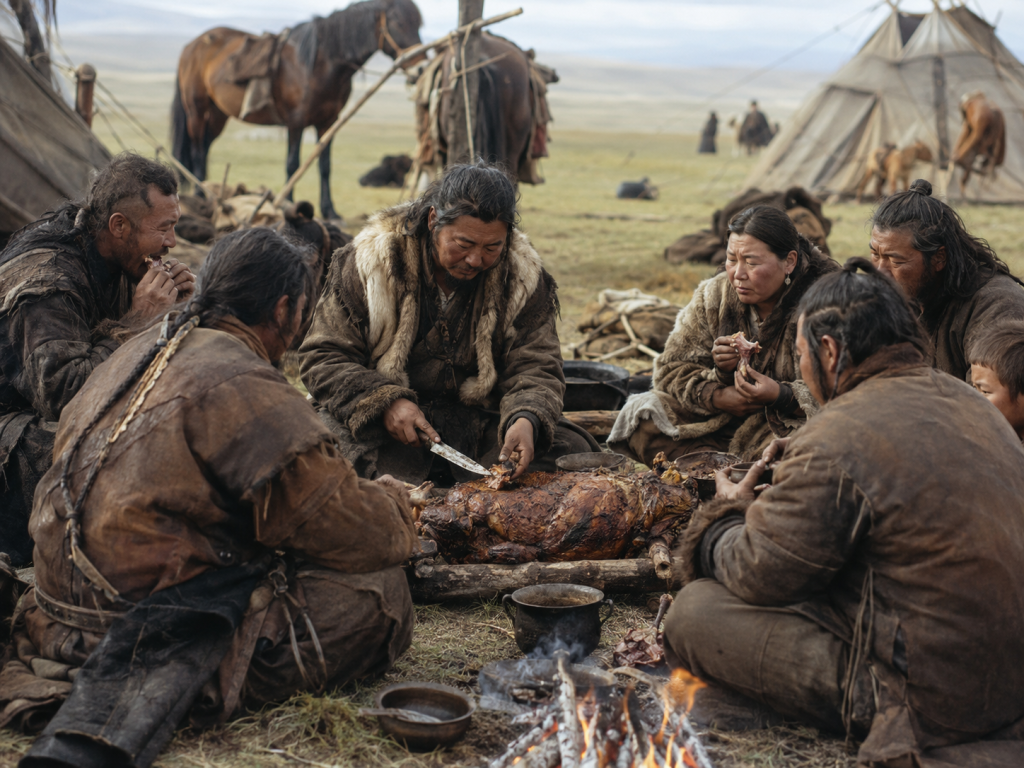
“Lastly, it is a historical fact that the largest land empire in history was that of the Huns, with the Khans as their leaders. Genghis Khan’s army derived most of its nutrition from mutton. Eating mostly lamb allowed the Hun army to go for longer periods of time than their enemies without eating again, travel greater distances, and have better tooth and mouth health. Not to mention, the army likely performed better on the battlefield as well. Most of their enemies, including Western armies from Europe, were dependent on grains and had to eat more often, were smaller in stature, and had poor dental health and other problems.
If you want to be strong like a Hun, you may consider the carnivorous diet for a time” (4).
Eating Fat Makes You Thin
Many people go on special diets to lose weight. Seldom will you lose weight on a low-fat diet. However, many report losing weight and doing well on lower-carb diets. A few of these diets include the Atkins diet, the paleo diet, the keto diet, and the low-carb diet. There are others. They all tend to be lower-carb and higher-fat.
The Atkins diet and the paleo diet have many followers. However, each time they rewrite the diet, it seems to change a little, so if you’re going to try either one of these, you might need to do a little research to see if you are truly following the latest version. Both allow for more carbs than the keto diet, but the carbs are complex, not simple sugar carbs.
The keto diet is stricter. When you achieve ketosis, you are no longer burning glucose for fuel, but you are now burning fat. The typical ketogenic diet contains 70% fat, 20% protein, and only 10% carbs. The carbs should be healthy carbs like veggies and not processed macaroni and cheese. The fat should be good oils, not vegetable oils. A low-carb diet can be said to be anything with carbs totaling less than around 25% of your dietary intake. You may eat fewer carbs than this. As the name suggests, it is kind of arbitrary beyond the 25% or less rule.
Here is the science. A calorie is not a calorie is not a calorie. Not all calories are the same. Well, they are the same if you use a test tube and burn them with fire or some such. However, when you eat them, they act differently in the body.
If you eat 100 calories’ worth of broccoli, it will act one way in the body; if you consume 100 calories from a glass of soda, it will act differently. You will gain weight from the soda, not from the broccoli.
If you are in the wild and starving, and you happen to catch a bunny, don’t eat it. You will actually lose weight. You will starve faster. Bunnies give you a net negative in weight gain. The same is true for a hard-boiled egg. It is a net negative for weight gain.
Counting calories is meaningless.
Fat makes your body work, as does protein. When you eat carbs, especially simple carbs, your body doesn’t work very hard. It breaks them down very fast and then stores them as fat. Eating carbs makes you fat. Eating fat makes you thin.
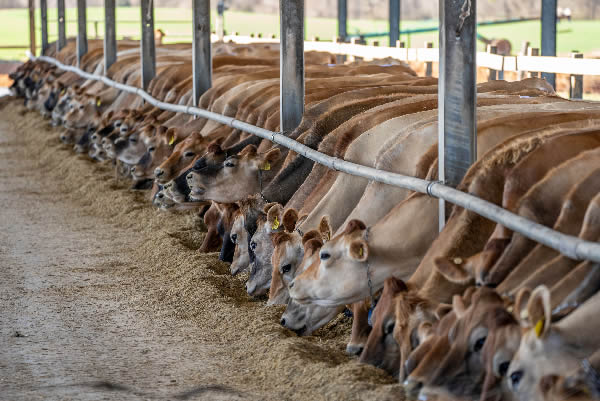
Ask a farmer how he fattens his cows next time you meet one.
Cholesterol Protects Our Brains and Protects Us from Cancer
Do you want to remember your kids’ names? Do you like thinking clearly? Do you want to lower your chance of cancer potentially? Maybe you should eat foods higher in cholesterol.
Cholesterol protects the brain from all sorts of assaults. It improves your memory and helps you think more clearly. Lower your cholesterol and open yourself up to all kinds of trouble.
Cholesterol is also a good protection against cancer. When your body has more cholesterol, you tend to have a lower likelihood of having cancer.
When you eat a low-fat diet, you tend to consume less cholesterol, which is not good.
We Eat Fruit Devoid of Minerals
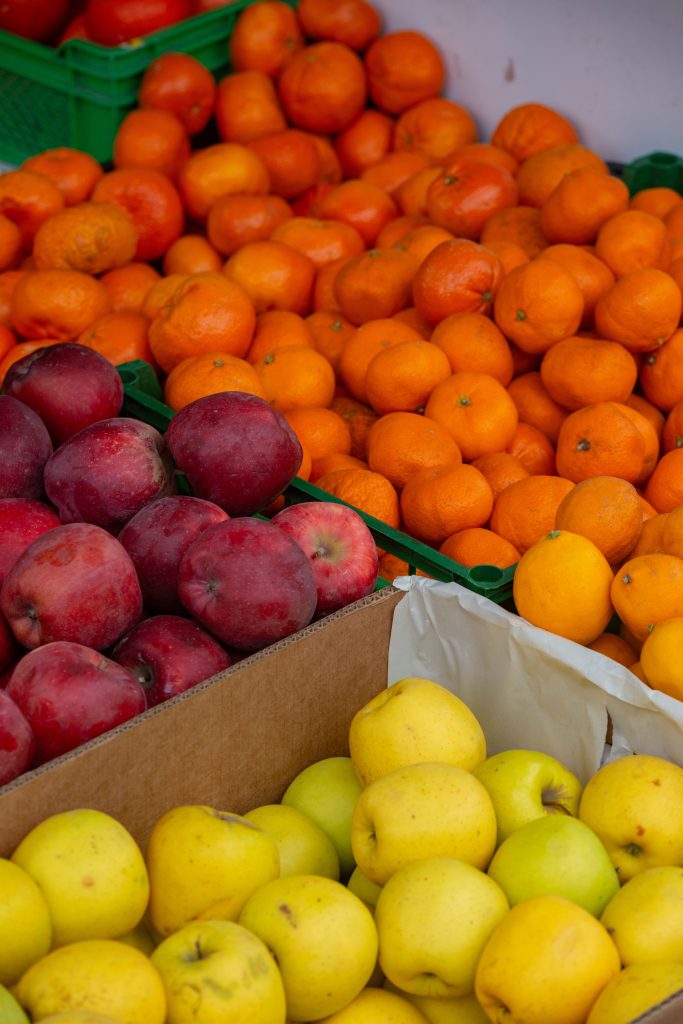
When we eat fruit in the US, it usually has very few minerals compared to what our ancestors ate 100 years ago. Before refrigeration, people tended to eat vine-ripened fruit. Vine-ripened fruit has 80 to 90 percent more minerals than does modern grocery store fruit. Most fruits absorb the minerals from the ground as they ripen or begin to turn ripe until they are ready to eat (5).
We do all sorts of bad things to fruit to make them turn ripe for the store as well. For example, it is common to spray oranges with formaldehyde to make them turn orange in color. Yum.
Why So Many of Us Have a Vitamin E Dependency
A vitamin dependency can be described as the following. When you go low enough in a vitamin for long enough, you sometimes need more of that vitamin just to stay symptom-free.
For example, when a dog goes without niacin (vitamin B3), it develops a condition called black tongue. If you give him the standard amount of niacin to stay healthy, his black tongue goes away. However, if he had black tongue long enough, he would need an even greater amount of niacin for the rest of his life, so that his black tongue does not return.
This is true for humans as well. If a person is deficient in niacin, they will get pellagra. If you give him a little niacin, the pellagra goes away. If he had pellagra long enough, he would need a great deal more niacin to stay symptom-free, and he would likely need to stay on the higher dose for the rest of his life. Instead of 10 to 20mg of niacin that would normally be needed, he might need 1000mg or more to stay free of pellagra symptoms.
This is where many in the US are with regard to vitamin E. We have been so low for so long that we have developed a vitamin E dependency.
Ways We Lose Vitamin E with the Modern American Diet
There is a lot more I could say about diet than I am briefly saying here. But I want to leave you with one last thought. The people of the US who lived 120 years ago had a lot more vitamin E in their diet than you or I do today. We have become so low in vitamin E that many of us have become vitamin E dependent.
Let’s look at some of the ways our diets now lack vitamin E.
First, the freeze-drying process destroys vitamin E (6). I was at my natural veterinarian’s office recently, and I was making fun of one of the foods she was recommending for my dog because the package boasted that the dog food was freeze-dried. I informed her that the freeze-drying process destroys vitamin E. So, we read the package. The last ingredient added was vitamin E with mixed tocopherols!
Doggies eat better than us!
It should be noted. Freeze-drying is not the same as flash-frozen. Many bags in the grocery store contain frozen vegetables that are flash-frozen. This process does not remove the vitamin E. The fruits tend to be either freeze-dried or flash-frozen, but are often flash-frozen as well.
Seed oils destroy vitamin E. These include vegetable oil, canola oil, corn oil, etc. None of these oils existed before the 20th century. It doesn’t matter how much vitamin E is in these oils. They still deplete our bodies of vitamin E. When we cook with these oils, we lose even more vitamin E (6).
Most processed foods tend to lower vitamin E in the body. Artificial dyes tend to destroy vitamin E (6).
White rice and white flour were invented at the end of the 19th century. You could fill a paper sack full of white flour or white rice, and the mice and rats would leave it alone. An advancement! Right? The mice and rats wouldn’t eat them because there were no nutrients in them. Later, because of the pellagra (niacin deficiency) epidemic, manufacturers started enriching the flours and the rice. However, this meant adding a few B vitamins and perhaps some D3. It did not include adding vitamin E back, and it still doesn’t.
And no “whole wheat” bread is any different. Our government only requires makers of bread to put a few grains of whole wheat into bread called “whole wheat,” so most manufacturers don’t put much back.
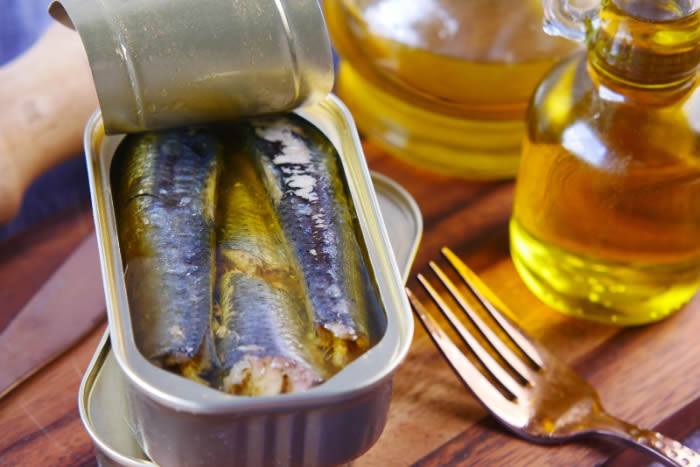
Our consumption of fish is way down from what it used to be. Fish is higher in vitamin E than regular meat.
We take iron or get iron injections. Iron is a vitamin E antagonist and will lower the body’s supply of vitamin E (6).
Grass-fed beef is higher in vitamin E, beta-carotene, the B vitamins: B12, B3, B6, B2, vitamin K2, Omega 3 (Less Omega 6), CLA, the minerals: iron, zinc, magnesium, and potassium.
Also, the advice we are given is to choose lean meat and eat lean cuts; however, if you do so, you will cut out the vitamin E. The fat-soluble vitamins are stored in the animal’s fat. There is some in the meat, but more in the fat. This is one of the benefits of tallow and also lard.
However, vitamins E and K2 tend to be higher in Ghee (clarified butter) and tallow than in lard. And, yes, Ghee is pretty good with the other fat-soluble vitamins as well and has the highest smoke point, meaning it is usually a little better to cook with it.
And I’m sure there are other ways we destroy the vitamin E in our food supply and bodies.
Conclusion
At the end of the day, the body doesn’t run on good intentions or government food pyramids—it runs on what we actually feed it. My own family’s struggle with weight gain on a “heart-healthy” low-fat diet wasn’t a personal failure; it was the predictable result of following advice that misunderstood how fat, carbohydrates, and cholesterol actually work. The traditional peoples we’ve looked at—the Inuit, the Masai, even Genghis Khan’s army—thrived on diets that would make a modern nutritionist nervous, precisely because they avoided the processed carbohydrates that do the real damage.
A few key takeaways:
- Not all cholesterol is the enemy. Small-particle cholesterol from sugar and refined carbs is the real culprit in artery damage—not the cholesterol from fat.
- Carbs, not fat, drive weight gain. Simple sugars get stored as fat quickly, while dietary fat and protein are essential for survival and don’t carry the same metabolic penalty.
- A calorie isn’t just a calorie. The same number of calories can behave completely differently in the body depending on the source.
- Cholesterol supports brain and immune health, including playing a protective role against cancer—so driving it down isn’t automatically a win.
- Modern food processing has quietly stripped vitamin E from our diets through seed oils, freeze-drying, refined grains, and a shift away from animal fats—leaving many of us in a long-term deficiency we don’t even recognize.
None of this is meant as a one-size-fits-all prescription—bodies and circumstances differ. But it’s worth asking whether the conventional wisdom you’ve been handed is actually serving your health (1).
References
- Anthropic. Claude (Sonnet 4.6) [medium] [Internet]. 2026. Available from: https://claude.ai
- Berry KD. Lies My Doctor Told Me. United States: Victory Belt Publishing; 2019.
- Berkson, Burt. The Alpha Lipoic Acid Breakthrough. New York: Three Rivers Press
- Brocato, Robert. Heal Your Brain and Mood Naturally: A Do-It-Yourself Guide. Focus on the Mind, LLC.
- Thompson, Robert; Barnes, Kathleen. The Calcium Lie II: What Your Doctor Still Doesn’t Know. Take Charge Books. Kindle Edition.
- Shute W E. Dr. Wilfrid E Shute Complete Updated Vitamin E Book. New Canaan, Connecticut: Keats Publishing; 1975.