

2. Heart Health Supplements: Vitamin E, K2, D3, and the Truth About Calcium

This is the Second Article in the Heart Health series.
“The first one to plead his cause seems right, Until his neighbor comes and examines him”
(Pro 18:17, NKJV).
This proverb is describing how the first to state his case usually seems right until someone else gives a different point of view or someone else questions the person. This is our spiritual state without Christ. We seem right with God, but if you look deep enough, if you are cross-examined, you will know you need a Savior.
You have been told again and again, go see your doctor, follow his advice, do as you are told, take your medicine, and so forth. And while this may sometimes be good advice, it is not always good advice.
I am describing alternative advice for you, and you may want to examine what I am saying and decide for yourself if it is something you want to look into. I am not saying not to see your doctor. I am not giving medical advice at all. I am simply giving you information that you likely have not heard before, a different perspective, a cross-examination, if you will.
Why Heart Health Starts with Understanding Nutrients
Your health matters, and you can improve your heart health. Knowing what to look for can help you make better decisions.
When it comes to heart health and wellness, few topics generate as much confusion as nutritional supplements. Are vitamins safe? Are they as risky as some headlines suggest? And how do they really compare to pharmaceutical drugs in terms of side effects and danger? This chapter takes a closer look at these questions, exploring the difference between nutrient side effects and drug side effects, debunking some common myths about vitamins like E and K2, and beginning the discussion of minerals — specifically calcium — with respect to your heart health. Along the way, we’ll challenge a few widely repeated claims and ask you to look at the evidence for yourself.
The Safety of Nutrients vs. the Danger of Pharmaceutical Drugs
The first thing you have to realize is that, in most cases, vitamins and other nutrients do not have negative side effects. Anything you eat, whether food, a supplement, or anything else, can have negative side effects in a sense. If you drink too much water, you can push all the electrolytes out of the body and eventually die. Is this a negative side effect of drinking water, then? Well, sort of, but not really.
If you were to add a little sea salt to your water, this would not happen, and then you could safely consume as much water as you want, as you replace your electrolytes and other minerals. So, there can be negative consequences to anything you do nutritionally. That said, this is not the same as taking a pharmaceutical drug, where the list of side effects is real and can be devastating.
For example, the US spent about 8.5 billion dollars in the year 2004 on NSAIDs (nonsteroidal anti-inflammatory drugs), and then spent another $2 billion treating the side effects from taking NSAIDs (1). And although people do occasionally hurt themselves by taking supplements, there are seldom serious, lasting negative consequences. There are exceptions, as I will reveal below, but not usually fatal ones.
Listen to this. A recent report put out by a panel of two professors and three doctors claimed this: “And as you can see, 106,000 of those deaths were from non-error negative effects of drugs. Let that sink in. Over 100,000 people died from FDA-approved drugs that were used properly, yet they still killed the person who took them” (2).
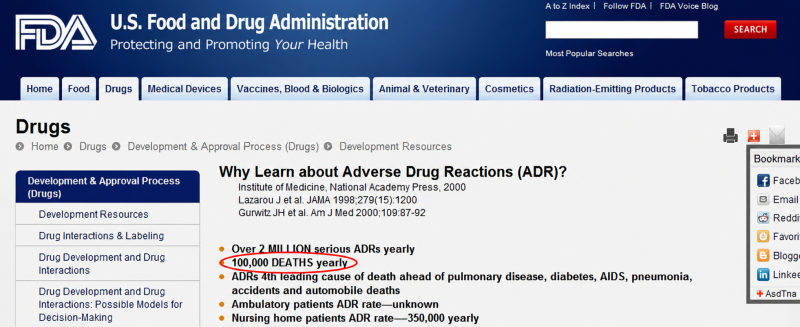
(https://thetruthaboutcancer.com/killer-drugs/)
And this is a vastly conservative estimate, as the real number is more likely much higher. And again, this has nothing to do with doctors who made errors or patients who took their drugs incorrectly. These are patients who followed their doctor’s advice and took their drugs correctly, and still died.
But let’s say that somehow the FDA managed to tell the truth, and the real numbers were not really much higher. This would still mean 100,000 people died from following their doctor’s orders when taking drugs. How many people died from taking nutritional supplements in the same year? There weren’t many, if any.
Listen to this report from Dr. Andrew Saul:
(OMNS Jan 30, 2021) The 37th annual report from the American Association of Poison Control Centers shows zero deaths from any vitamin. Supporting data is in Table 22B, p 1508-1518, at the very end of the report published in Clinical Toxicology. [1] Interestingly, it is so quietly placed way back there where nary a news reporter is likely to see it.
- Furthermore, there were no fatalities from amino acids, creatine, blue-green algae, glucosamine, or chondroitin.
- There were no deaths from any homeopathic remedy, Asian medicine, Hispanic medicine, or Ayurvedic medicine. None.
- There were no deaths from herbs. This means no deaths at all from blue cohosh, echinacea, ginkgo biloba, citrus aurantium, ginseng, kava kava, St. John’s wort, valerian, yohimbe, ma huang/ephedra, guarana, kola nut, or yerba mate.
… Throughout the entire year, coast to coast across the entire USA, there was not one single death from a vitamin. If vitamin supplements are allegedly so “dangerous,” as the FDA, the news media, and even some physicians still claim, then where are the bodies? (3).
All that said, you can hurt yourself taking supplements, but most often you can also correct the problem and begin to take the supplement again the right way without serious harm. Nevertheless, it is best to supplement correctly, so you don’t needlessly suffer and put yourself at risk for temporary discomfort or illness, and yes, very occasionally, death.
In terms of vitamins, we usually speak of side benefits, rather than side effects. With pharmaceutical drugs, seldom do we speak of side benefits, and very often, almost always, we speak of negative side effects — including death.

My own dad had cancer twice. Both cancers happened when he was taking pharmaceutical drugs. In each case, the particular cancer he had was listed as a possible side effect of the particular drug he was prescribed.
During the first cancer he had, when he started bleeding, his primary care doctor told him that he had an infection and put him on an antibiotic. Fortunately, he was also seeing a very sharp cardiologist at the same time, who had a record of his medications, listened to his symptoms, and suggested that my dad see a very good urologist. The urologist diagnosed cancer and began treatment. This early intervention likely saved my dad’s life.
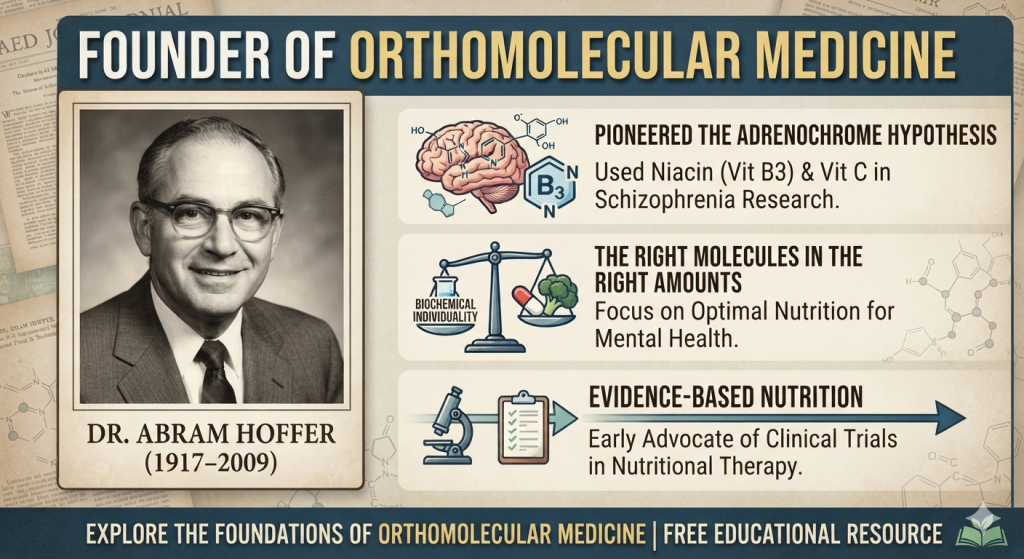
As a different example, Dr. Hoffer used to prescribe niacin (vitamin B3) for his patients with mental illness, and he was often asked about the side effects of taking all that niacin. He used to answer, “Hmph, you’ll live longer.” Nowadays, we know he was correct. Many people seek to increase their NAD levels for the benefit of a longer life, and this is the very positive effect of niacin he was describing. Niacin raises NAD in the body.
One more point for illustration: magnesium is used in over 300 processes in the human body. When you supplement with magnesium for one thing — like helping with blood sugar — you support all of those other processes as well. You gain all of those positive effects. Magnesium leaves the body fairly quickly, so supplementing with it is usually a good idea.
So, when we talk about supplementing with vitamins E and C as part of a heart health supplement routine, you will usually see a positive benefit to your health beyond what you may be trying to achieve with your specific wellness goals.s.
Food-Sourced vs. Isolated Vitamins: What’s the Difference?
All vitamins are natural in a sense because they are God-created. But some people use the term “natural” to mean food sources of vitamins, such as an orange or acerola berry for vitamin C. I will use the term food-sourced versus natural to make this distinction.
Food-sourced vitamin E, C, and other vitamins can help, but this can also add expense. And depending on your goals, it may or may not be necessary. I will discuss other nutrients besides vitamins, like minerals, below, as we progress.
I have talked a little about food-sourced vitamins concerning vitamin E. However, all vitamins also come in a food-sourced form and a more isolated form. In a perfect world, we would all get our vitamins from the food we eat. But, alas, no such world exists. Well, maybe it exists in your science fiction novels, but other than that, it is not to be found.
In order to accomplish certain things in the body, it is often beneficial to isolate a particular vitamin to receive the benefits of higher levels of it. Higher levels of isolated vitamin C have been shown to help the body deal with infections, both bacterial and viral, support detoxification, and more. All of these things are very beneficial. In most cases, you cannot get your vitamin C levels high enough by just eating foods high in vitamin C. So, we take isolated vitamin C.
That said, often we can increase the effectiveness of isolated vitamin C by adding a few teaspoons of food-sourced vitamin C, perhaps in the form of powdered rose hips or acerola berry. This will give your body even more support. But seldom is it necessary to take all food-sourced vitamin C for all of your desired vitamin C intake.
Common Vitamin Myths, Debunked
In the last chapter, I made a few claims about vitamin E: that it isn’t a blood thinner, that you don’t need to take mixed tocopherol or natural forms specifically, that it can help remove plaque, and that it supports healthy blood clotting. These claims are not only true, but I could cover even more ground than this.
There is a lot of misinformation on the internet today about vitamins and nutrients. A friend of mine once said that niacin (vitamin B3) was a poison. He looked it up on the Internet. Another person told me she was allergic to vitamin C. And another told me he was allergic to iodine.
You can’t be allergic to a vitamin by definition. If you have no niacin in your diet, you develop a niacin deficiency called pellagra, and you can die from it. If you have no vitamin C, you develop scurvy. With no iodine at all in your diet, you die. It’s like saying you’re allergic to water — by definition, you can’t be. It is essential.

We are told vitamin C causes kidney stones. The evidence does not support this. We are told we will “just pee expensive pee” if we take vitamins — Not true. We’re told you can get all the vitamins you need from food alone — Again, not true. And one of the biggest myths we’ll address below is that taking more calcium is automatically good for your bones. The evidence suggests it’s far more complicated than that. You need all your minerals for healthy bones.
There are so many vitamin myths that it’s hard to list them all. One such myth, which we’ll dig into next, is that vitamin E is a blood thinner. It isn’t. This is a modern myth, and it’s an easy conclusion to reach if your research consists solely of quick internet searches. But that doesn’t make it true.
Is Vitamin E a Blood Thinner? The Truth
I’m not making any claims here about whether adding vitamin E or K2 to a regimen that alreI’m not making any claims here about whether adding vitamin E or K2 to a regimen that already includes warfarin or other blood thinners is a good idea. This chapter is not personal medical advice — see a competent nutrition specialist for your specific situation. That said, vitamins E and K2 themselves are not blood thinners. Dr. Shute used to take his patients off blood thinners because, in his clinical experience, they statistically didn’t help and could worsen the situation (4).
An antithrombin is a substance that helps the body break down blood clots. If you look up the word “antithrombin,” you’ll see that many people lack the ability to break down blood clots efficiently. Few sources explain why. They simply go on to explain what drugs can do for this. The reason people have trouble clotting is most likely a lack of vitamins E and K2 in the body.
Blood thinners are classified as antithrombins. Next, you’ll read elsewhere that vitamin E helps the body break down blood clots. The conclusion many jump to: vitamin E is a blood thinner. A more accurate statement is that vitamin E is an antithrombin, but that does not make it a pharmaceutical-style blood thinner.
It rarely occurs to people that it may have been a lack of vitamin E that caused the body to have trouble breaking down clots to begin with — and that vitamin E breaks down clots through a completely different mechanism than a pharmaceutical blood thinner. If the body had sufficient levels of this important nutrient, it might never struggle with blood clots in the first place.

Both pharmaceutical drugs and vitamin E are antithrombotic, but they work through different mechanisms. Vitamin E is not a blood thinner — it uses a different pathway to support healthy clotting.
Vitamin K2 also helps the body with blood clotting, and it isn’t a blood thinner either. Vitamins are nutrients, not commercial-grade pharmaceutical blood thinners that come with a long list of side effects.
One well-known blood thinner is warfarin — the same compound used in rat poison. If you want to take rat poison instead of natural vitamins, that’s your choice. I wouldn’t, but I won’t stop you.
Vitamin K2, D3, and Magnesium for Arterial Health
Let’s talk briefly about vitamin K2 and other supplements for heart disease and hardening of the arteries.
Vitamin K2 can be very helpful for people concerned about atherosclerosis. Vitamin K2 helps the body utilize calcium properly. If people have enough K2 in their diets, they will tend to direct calcium to where it belongs — bones and teeth — rather than soft tissue. K2 is associated with reduced calcium buildup in the arteries and elsewhere in the body. In other words, with enough K2, people tend to have a lower likelihood of calcium oxalate kidney stones, bone spurs, and calcium deposits in the shoulders, knees, gallbladder, or elsewhere.
Additionally, for the body to utilize K2 properly, you should have enough vitamin D3 and magnesium in your diet. Vitamin D3 not only helps the body use vitamin K2 properly, but also plays a role in helping the body use calcium correctly to begin with. While not as directly important as K2 for calcium regulation, it still plays a supporting role — and vitamin D3 also helps the body use K2 more effectively.
Magnesium helps the body to utilize K2 properly as well. Because magnesium is an electrolyte, the body loses it quickly. Like all electrolytes, it’s a good idea to supplement with some every day.
Magnesium is generally best taken in forms like magnesium malate, magnesium taurate, magnesium glycinate, or other “-ate” forms, which tend to be well absorbed. Other forms of magnesium (like magnesium citrate or oxide) are more commonly used for relieving constipation rather than for absorption.
So, by taking vitamin K2 — and to a lesser extent D3 — you may help prevent the buildup of arterial plaque. Vitamin E and C, on the other hand, are associated with helping the body break down and remove existing plaque. Combining vitamins E and C with K2 and D3 and the mineral magnesium may be a powerful heart health supplement strategy for both stopping plaque buildup and supporting its removal. Next, let’s look at how minerals fit into this picture.
Calcium and Heart Disease Risk: What You Need to Know
First, it’s worth saying: you need more than calcium alone to be well. If you take any single mineral in complete isolation for long enough, you can damage the body. I’ll get into this in more detail in the next chapter in this book.
Dr. Robert Thompson, who has been ordering Hair Tissue Mineral Analysis (HTMA) tests for over 12 years, reports that 90 percent of his patients show calcium excess or relative calcium excess, ranging from significant to extreme (6). This may be fairly typical of the broader US population. According to Thompson, calcium supplementation may increase heart disease risk. He says, “Calcium supplementation increases heart disease risk by 31%, while worsening bone health” (5).
The concern with excess calcium is that it’s the primary mineral the body uses to build the plaque that accumulates in arteries. Thompson’s HTMA research suggests arterial calcification and cellular energy depletion are common findings linked to calcium supplementation (5).
So, if you want to reduce your risk of heart disease, it’s worth examining your calcium intake and considering a mineral test, such as an HTMA test, to see where you stand. I’ll look at minerals more closely in the next chapter, but for now, consider getting an HTMA test done and reviewing your calcium levels alongside your other minerals.
A final thought: minerals work best when they’re balanced. Any mineral that’s out of balance — too high or too low — can affect the body negatively. Excess calcium, in particular, has been linked to heart disease risk and other concerns, including thyroid health.
Heart Health Supplements: Putting It All Together
Heart health is not just about avoiding disease — it’s about giving the body what it needs to function properly. Vitamins, minerals, and other nutrients are not the same as pharmaceutical drugs. While supplements should still be used wisely and responsibly, nutrients often support many systems in the body at once and may offer benefits far beyond the original reason for taking them.
Vitamins such as E, C, K2, and D3, along with magnesium and properly balanced minerals, may all play important roles in supporting healthy arteries and overall cardiovascular wellness. The key is not to guess — learn, test, and make informed choices. A good mineral test, such as an HTMA test, can help reveal whether calcium and other minerals are out of balance. In the next chapter, we’ll look more closely at minerals and why balance matters so much for the heart and the rest of the body.
Key Takeaway Points
- Nutrients and pharmaceutical drugs are not the same, and their risks should not be treated as equal.
- The benefits of vitamin E and vitamin K2 are commonly misunderstood, especially in relation to the ability of these nutrients to help control blood clotting.
- Vitamin K2, D3, and magnesium may help the body use calcium properly and reduce unwanted calcium buildup.
- Excess calcium may contribute to arterial plaque and other health problems when minerals are out of balance.
- Testing, especially mineral testing such as HTMA, can help people make better decisions instead of guessing.
- The next step is to understand minerals more deeply, especially calcium, and how mineral balance affects the heart and your overall health.
References
- Holford, Patrick. Say No to Arthritis: The Proven Drug-Free Guide to Preventing and Relieving Arthritis. London, EC4Y 0DY: Hachette Digital Little, Brown Book Group.
- Bollinger, Ty; Bollinger, Charlene. Propaganda Exposed Uncensored, the complete transcripts [Transcripts]. Available from: https://secure.thetruthaboutcancer.com/wp-content/uploads/Propaganda-Exposed-UNCENSORED-2022-Transcripts.pdf
- Gummin DD, Mowry JB, Beuhler MC, Spyker DA, Brooks DE, Dibert KW, et al. 2019 Annual Report of the American Association of Poison Control Centers’ National Poison Data System (NPDS): 37th Annual Report. Clin Toxicol. 2020 Dec 1;58(12):1360–541. doi:10.1080/15563650.2020.1834219
- Shute, W. E. Dr. Wilfrid E Shute Complete Updated Vitamin E Book. New Canaan, Connecticut: Keats Publishing; 1975.
- Thompson, Robert. Mineral Medicine. Dr. Robert Thompson, MD; 2025.
- Thompson, Robert; Barnes, Kathleen. The Calcium Lie II: What Your Doctor Still Doesn’t Know. Take Charge Books. Kindle Edition.